
1. More than 120 hoaxes and disinformation claims debunked about Russia and Ukraine
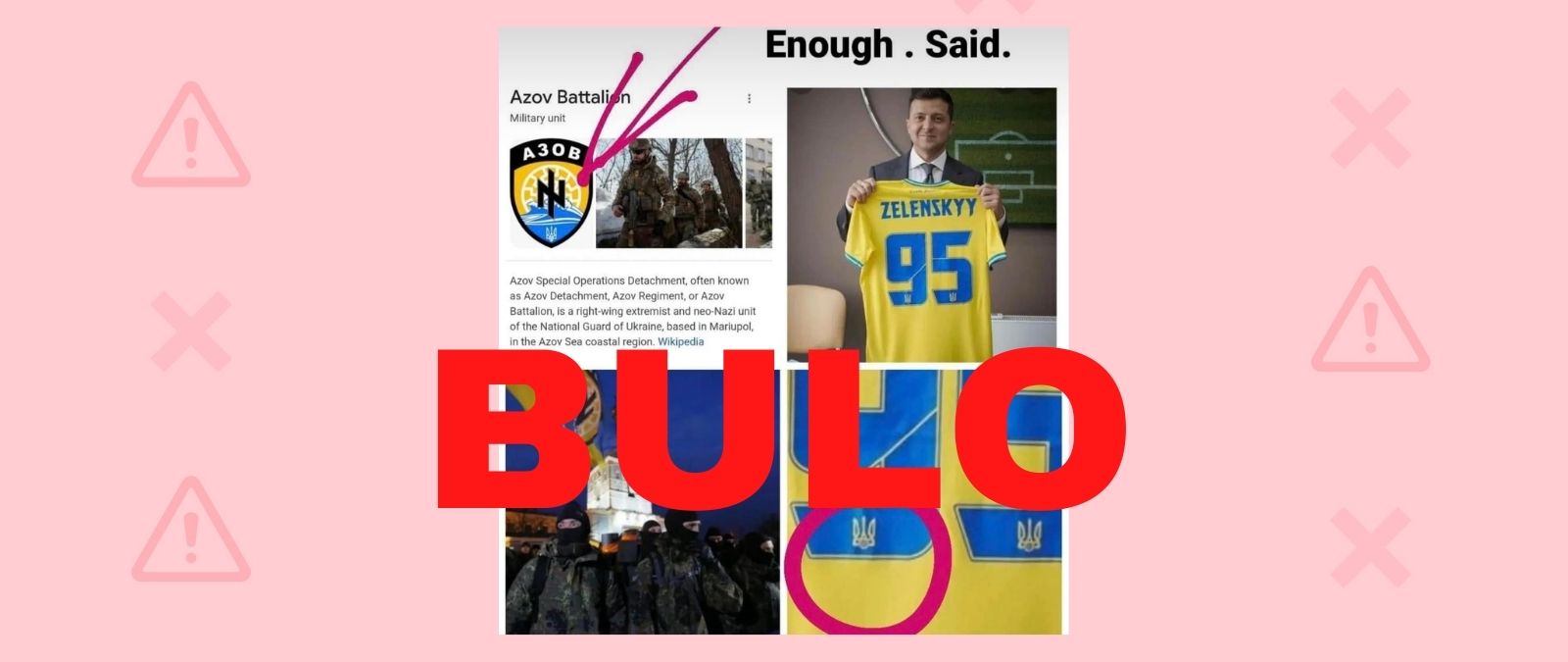
Screenshot of one of the hoaxes verified by Maldita.es
Since the Russian president, Vladimir Putin, informed the world of the start of the attacks, hundreds of videos and images supposedly linked to the Russian war against Ukraine have circulated, which we are collecting in a compilation. As of the publication date of this article, more than a month after the invasion began, we had debunked more than 120 hoaxes.
Among them we have verified videos of air strikes that are shared as if they were current although they were recorded in Libya in 2011 or in Beirut in 2020; but also content about supposed fighter jets shot down that actually corresponded to images created with a simulator or to video games. Disinformation about victims of the armed conflict has also circulated, who have been doubly victimized through campaigns, such as the Ukrainian woman injured in an explosion in Chugúyev or the pregnant woman injured in the explosion at the Mariupol hospital.
We have detected everything from invented subtitles that do not correspond to the speaker’s words, to Twitter accounts impersonating media outlets. Also, frames from TV series have been shared to make them appear as real content of the Ukrainian president, Volodímir Zelenski.
2. #UkraineFacts: a global and collaborative database to fight disinformation
All these lies, half-truths and unproven disinformation have circulated around the world since February 24. The idea that this wave of disinformation was also being recorded in other countries led Maldita.es to open a database and give access to the more than 100 fact-checkers worldwide to begin collaborating. Since then, #UkraineFacts has carried out more than 900 verifications worldwide.
With this valuable tool, a map has also been developed that allows access to the debunks of the most viral hoaxes. In #UkraineFacts you can see in which countries each piece of disinformation has been detected and access the debunks from the different fact-checking organizations that have investigated it.
3. The O Team is born: community and OSINT to fight disinformation after Russia’s invasion of Ukraine
Geolocating images, looking for signs that a video is or is not manipulated, checking what time a shooting took place… Sometimes it is necessary to resort to some of these tools – or all of them – to answer the queries you send us on WhatsApp (+34 644 229 319) and the volume of hoaxes is such that we only have one option left: turn to our community of Malditos and Malditas.
This is how ‘The O Team’ was born. O for OSINT: a volunteer anti-hoax brigade to fight together against disinformation about Russia’s invasion of Ukraine. This team, made up of Malditas and Malditos who had shared with us their superpowers related to OSINT, has been helping us for several weeks to give context to videos and images related to the Russian attack on Ukraine. These are some of the articles in which they have already helped us.
Thanks to them we have been able, for example, to geolocate the photo of military armored vehicles next to a building that was claimed to be the children’s hospital in the city of Mariupol, or to tell the story of the shooting between an alleged agent of the Security Service of Ukraine (SBU) and the Ukrainian police.
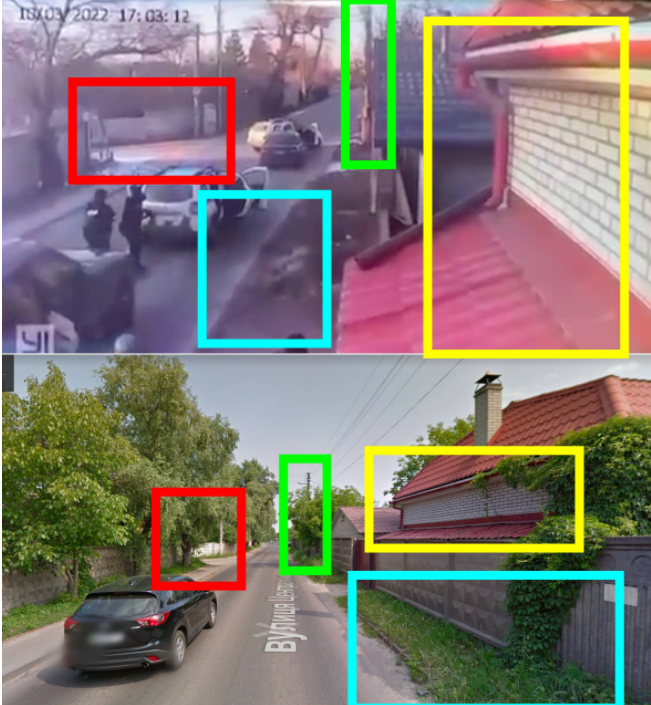
Comparison of the elements that appear in the shooting video (above) with those on Google Maps (below).
With all the verification tools, we have also tried to explain what we could know thanks to open-source intelligence sources, such as the bombing of a shopping center in Kyiv/Kiev on March 22. And to address other events such as the takeover, since February 24, of the former Chernobyl nuclear power plant and its consequences on radiation levels, we have relied on tools such as the bot that monitors environmental data in Ukraine, SaveEcoBot, as well as the help of experts and the superpowers of Malditos.
4. We are analyzing the formats of disinformation and how they circulate
As we have told you, the manipulated content we have found appears in the form of images and videos previously used in other contexts, such as the explosion of a petrochemical plant in Tarragona; fake magazine covers; tweets impersonating media outlets such as CNN; video game simulations or false subtitles.
The teams at Maldito Bulo and Maldita Educa are on alert to identify the formats of disinformation about the war in Ukraine and are compiling them in a collection. In recent weeks, deepfakes or ultra-realistic videos generated by computer to impersonate public figures have been detected. However, in the cases identified, of Zelenski and Putin, the poor quality of the editing was very evident.
Another strategy detected is a campaign that seeks to spread disinformation through false debunks or false-flag verifications that has been documented by the Media Forensics Hub team at Clemson University and the organization ProPublica in an investigation published on March 8 and has also been identified by Maldita.es in Spain. Another focus of our work is on denialist disinformation accounts and groups that spread this content and were already active before, especially since the beginning of the coronavirus crisis.
5. From COVID-19 denialism to pro-Kremlin disinformers: the evolution of denialist groups and their lies
The same groups that, during the pandemic, spread false information about the virus have now become disinformers regarding the invasion of Ukraine. These conspiratorial circles have managed to gain thousands of followers thanks to the spread of hoaxes and fake news.
Many of them were already known for sharing manipulated information and hoaxes related to the coronavirus, but many others have seen their influence increase thanks to the Ukrainian crisis. Among their hoaxes are, in addition to those mentioned earlier in the article, disinformation about Zelenski, the current president of Ukraine.
He has been accused of being a satanist, but also of being a cocaine user and of having fled Ukraine when the conflict broke out. However, Zelenski himself has continued to upload images and videos from his office and even from the streets of Kyiv.
He has also been accused of manipulating information in one of his videos, specifically the one in which he visits a hospital, claiming that the woman accompanying him is the deceased lieutenant Inna Derusova. At Maldita.es we debunked this hoax: the woman accompanying Zelenski is Tatiana Ostashchenko, commander of the Medical Forces of the Armed Forces of Ukraine.
6. We have explained how we use verification tools
At Maldita.es we are using a series of tools to fight disinformation and we have explained how we use them so that you can also verify information on your own. Some of them are tools such as InVid, Google Images reverse search or WayBack Machine, although we have also used geolocation maps such as Google Earth and even Wolfram Alpha Weather to determine the accuracy of a piece of information. In addition to offering you our toolbox, Maldita Educa explains how each and every one of them is used with practical examples.
7. Updated dashboard of international sanctions against Russia in figures, those affected and evolution by country
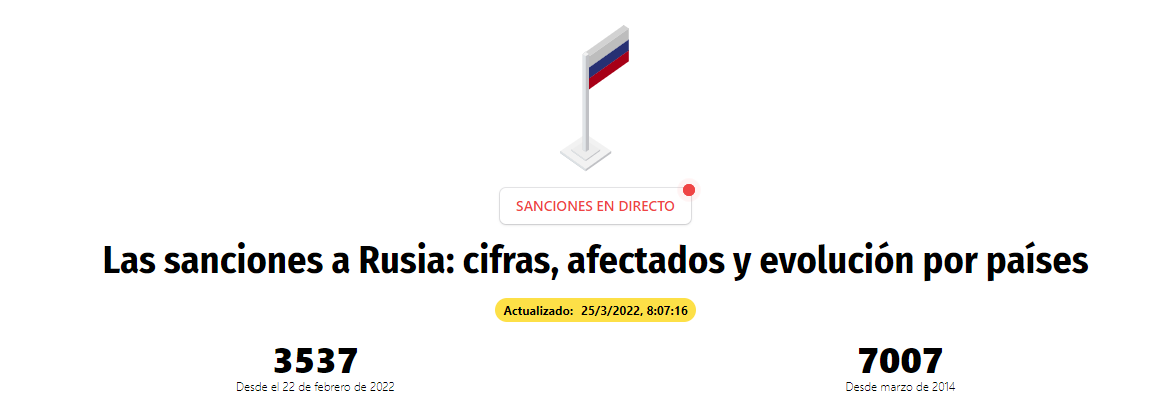
One of the first responses from the international community was to support Ukraine and try to pressure Russia through economic sanctions against the State and against Russian companies. At Maldita.es we have created a monitor with charts on the figures, those affected and the evolution of international sanctions against Russia by country that you can consult here. This information will be updated daily based on the analysis that Correctiv is conducting of the 'OpenSanctions' data.
8.'Malditas Twitcherías' about mental health, technological measures...
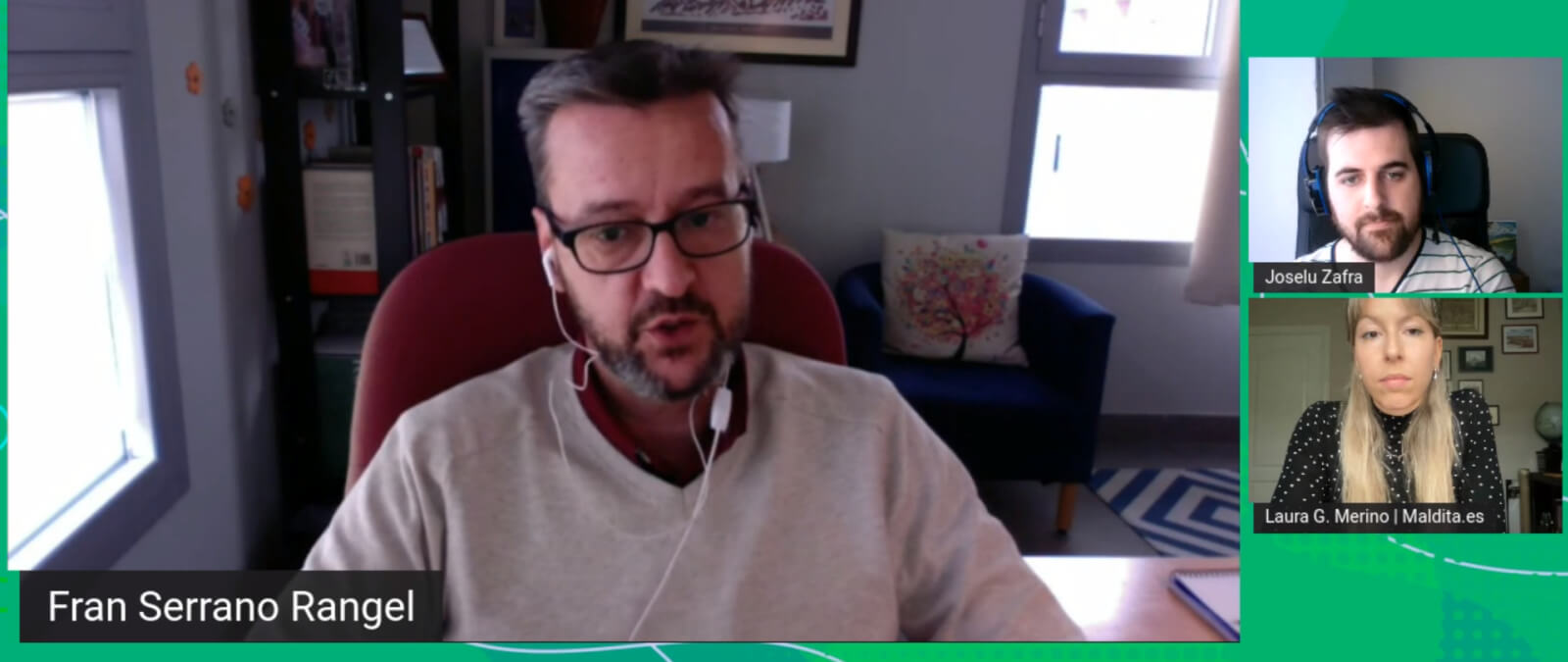
Anger, sadness, pain, empathy, concern, uncertainty, hope… The range of emotions we feel when following the news about the situation in Ukraine is immense and has an evident impact on mental health. In the Maldita Ciencia Twitchería on March 3 we talked about the importance of caring for mental health in the context of Russia’s attack on Ukraine.
Maldita Tecnología also addressed how digital spaces such as social networks and platforms are adapting to decisions being taken in the context of the war, such as the blocking of profiles or restrictions on media outlets. In the Technological Twitchería on March 2 the relevance of cyberattacks as elements that worsen situations of vulnerability was discussed, as well as the transparency of platforms such as Meta (Facebook), Google or Apple in their decision-making.
9. Do we know where the main Ukrainian and Russian communities in Spain are?
Yes, thanks to data. One month after the start of Russia’s invasion of Ukraine, the UN estimated that 3.7 million people had fled Ukraine as refugees to neighboring countries such as Poland, Slovakia, Hungary, Romania, Moldova and Belarus. From there, and in their flight from the war, Ukrainians may seek a new home in European Union countries, where an unprecedented measure was approved: temporary protection for displaced Ukrainians. This measure is compatible with applying for asylum and grants a residence permit of between 1 and 3 years to displaced persons, as well as access to employment, housing, Social Security and care for beneficiaries.
The teams at Maldito Dato and Maldita Migración tracked the data from the municipal register of the INE to identify the areas where there are Ukrainian and Russian communities, given the possibility that people leaving their country may seek to reach places in Spain where they have ties.

10. Have you gotten lost with the technological restrictions on Russia? We compile them for you
Not only did countries take reprisals against Russia after the invasion of Ukraine. Digital platforms and major tech companies have also taken decisions that Maldita Tecnología is collecting in a constantly updated article. They have also explained in more detail the position of Meta (Facebook), which on March 11 decided to "temporarily" modify its hate speech policies to allow messages inciting violence on social networks if they are directed at "Russian invaders" in some European countries. They have also talked about the use of Starlink satellites to connect to the internet in Ukraine and about the blocking of operators and social networks to RT and Sputnik News in Europe or their disappearance on Google Europe.
*11. The debunked disinformation compiled on TikTok
You probably already know this, but at Maldita.es we are very present on TikTok. Disinformation related to Russia’s invasion of Ukraine is also present there, as warned by this study by NewsGuard about how the platform shows this content to new users within minutes. That is why, in the middle of this wave of lies, half-truths and decontextualized viral content, the team got to work to spread the debunks when we surpassed 100 hoaxes or in five compilations [which you can see here: 1, 2, 3, 4 y 5]. Remember! In crisis situations do not share if you are not sure and send us anything you receive that makes you doubt at +34 644 229 319.
*Article updated on March 29, 2022 with a review of the TikTok videos that have been published about disinformation related to the Russian invasion on the @malditobulo account.