

One of the examples presented was the supposed video of the Speaker of the House of Representatives, Nancy Pelosi, drunk: a slowed-down video that in Spain has also affected several politicians.
After that, fact-checkers from countries such as Spain, India, South Africa, Germany and Brazil spoke about standardisation when presenting the results of a fact-check. On the technological side, the advantages and disadvantages of the ClaimReview system were discussed, a type of structured data used worldwide that allows search engines such as Google or Bing to display specific information in their results, as shown in the following image:
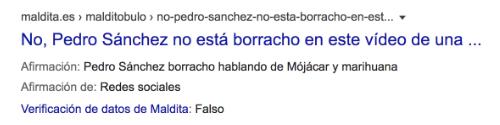
This type of data, very useful when it comes to labelling statements or claims, falls short when it is used to refer to manipulated images or altered videos. For this reason, during the event all the fact-checkers worked to establish a common system to name the different alterations that videos and images may present, based on the work of the Washington Post with its guide on manipulated videos.
The work and feedback generated at this international meeting will be used in the development of a new type of structured data, called MediaReview, which will make it possible to consistently label this type of disinformation across the world on Google and YouTube and on other platforms that decide to adopt it. This label will allow citizens to be alert to possible disinformation and decide for themselves whether they ultimately want to consume the lie or not, as ClaimReview already does.