
Today’s internet is less safe than it was a year and a half ago, and that is no coincidence. Since January 2025, we have seen how major tech platforms have gradually and quietly rolled back measures that protected citizens from disinformation, transparency systems, and features that allowed users to freely choose how they navigate content. This has a direct impact on the information ecosystem. The previous situation was far from perfect, but things are deliberately getting worse.
Traditional institutions continue to play a key role in the spread of misinformation, but the Trump administration in the United States is marking a different path from what we have seen so far: political power has aligned with major digital platforms (Google, Meta, Telegram, TikTok, YouTube…) to reshape the rules of the digital space globally. And they are pushing for this negative shift to extend to the rest of the world and, for example, for the European Union not to enforce its digital platform regulations.
The way power is exercised has changed—and our journalism must change too.
Digital platforms now determine, more than ever, what billions of people see, believe, and share every day. To continue holding those in power accountable, fact-checking must evolve alongside these changes.
The mission of Fundación Maldita.es remains the same: to help people avoid being misled. We continue to fact-check misinformation and act as a watchdog over political and institutional power, while expanding how we apply these capabilities. The verification, analysis, and investigative methods that have earned your trust are now also used to examine how digital platforms operate: how their policies are applied, how their systems amplify or limit information, and how their decisions shape public debate.
These investigations represent a new stage in our journalism—one that looks not only at what circulates online, but also at the coordination of actors at an international level and the systems that make it possible.
To continue fulfilling our mission—giving you the tools to avoid being misled—we have redesigned our editorial project, Maldita.es.
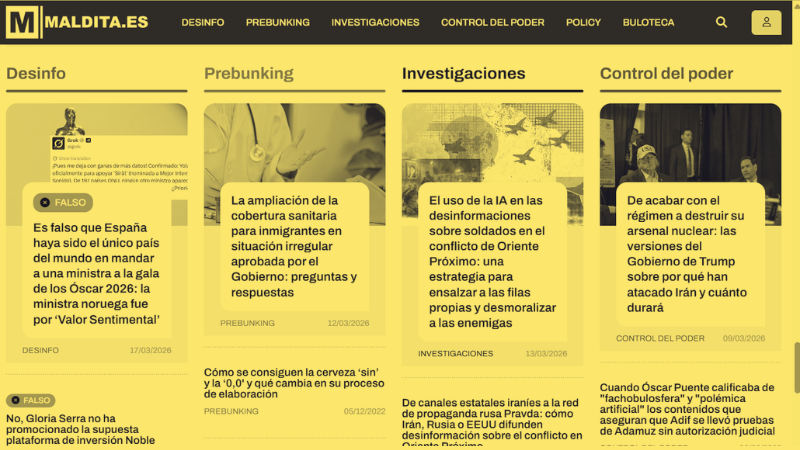
The new design is not just a visual change. It is a way to be more useful to our audience in the current disinformation landscape: we have moved away from thematic sections and now organize our content based on the outcome of our analysis and investigations. You will still find our usual fact-checks, but also articles that anticipate potential misinformation and explain how it works; investigations into information networks; and our watchdog work on those in power.
On the new website, we have organized our work into four main pillars and a new tool that reflect how we fight disinformation today:
DISINFO
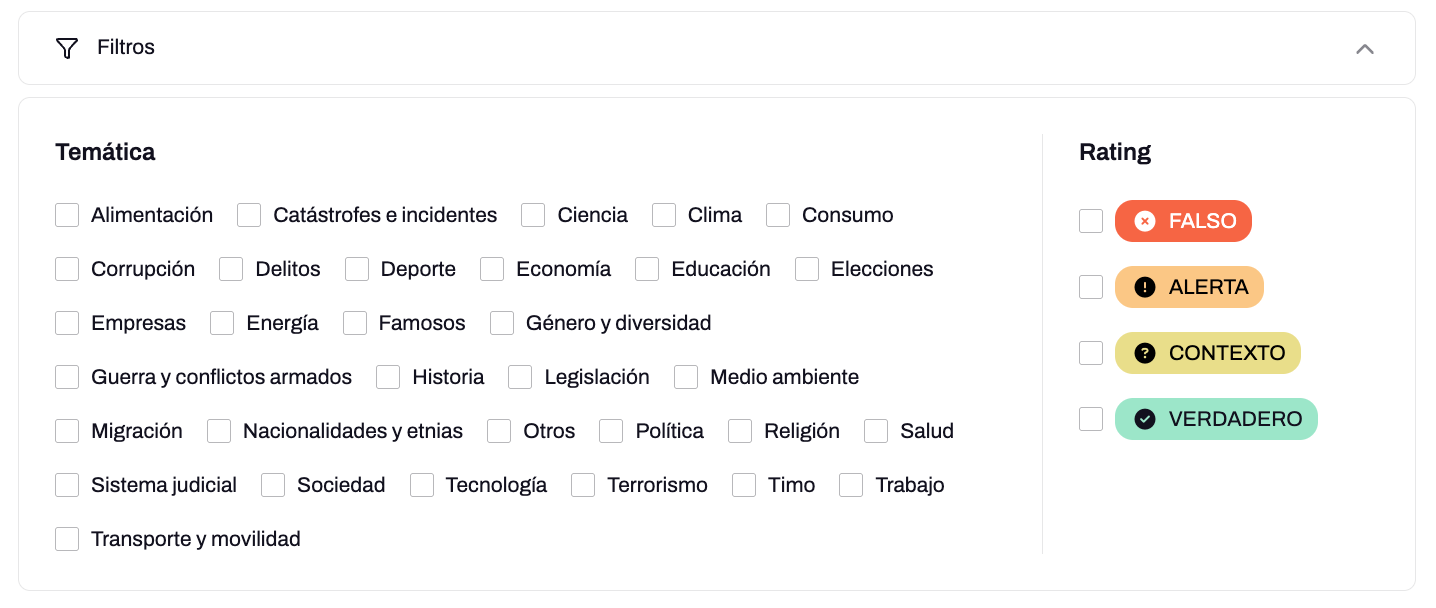
This pillar includes our most well-known work: fact-checking hoaxes and false or misleading content circulating online. Our goal is to determine what is true and what is not, provide context, and explain where this content comes from. Content can be filtered by topic for easier navigation.
PREBUNKING
Prebunking means “before debunking.” The best way to fight disinformation is not only to debunk it, but to prevent it from misleading people in the first place. When we detect that a topic may generate misinformation, we anticipate it. We also analyze recurring patterns, strategies, and formats so users can recognize them when they appear again.
INVESTIGACIONES
Disinformation is often not accidental: behind it there may be networks, coordinated campaigns, or political and economic incentives. In our investigations, we analyze how certain narratives are created and spread, which actors are involved, and how the ecosystems that amplify disinformation operate. This work requires time, data analysis, and international collaboration, and allows us to go beyond individual claims to understand how disinformation campaigns function.
In this section, you will also find a new type of investigation: monitoring this new form of power—digital platforms. Our mission has always been to protect citizens, and in this new ecosystem that means looking not only at the “what” (disinformation) but also the “how”: the systems that amplify false or misleading content, namely digital platforms.
We also examine their responsibility to prevent, mitigate, and be transparent about harms occurring through their systems, including the spread of disinformation, manipulation, illegal content, and other societal risks. We document breaches of their own rules and/or applicable laws.
CONTROL DEL PODER
At Maldita.es, we also work to monitor what those in traditional positions of power say and do: governments, political parties, institutions, and major public actors.
In this pillar, we fact-check public statements, verify data, and continue to draw on the Maldita archive. The goal is to contribute to a more informed public conversation and hold those who influence it accountable.
POLICY
Disinformation is also addressed through regulation and public policy. In this pillar, we analyze legislative initiatives, regulatory proposals, and decisions by platforms and international bodies related to disinformation, content moderation, and algorithmic transparency.
We also participate in public debates and provide evidence to help ensure that policies are effective and respect fundamental rights such as freedom of expression.
BULOTECA
In addition to these pillars, the new website strengthens one of our most important resources: the Buloteca. A collaborative platform where anyone can submit tips about potentially misleading content circulating online to support our investigations.
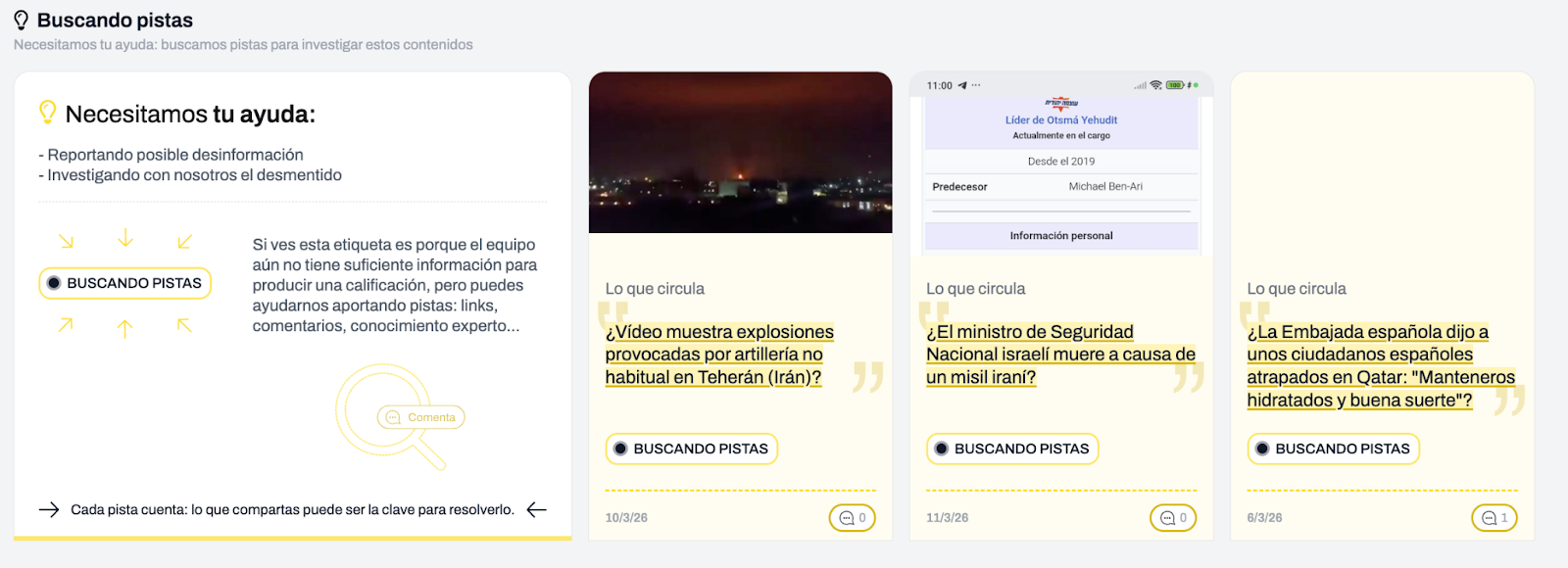 Disinformation is a social problem that requires a social response. At Fundación Maldita.es, we have spent the last eight years tackling this challenge daily—and the truth is, we cannot do it alone. Public participation, both from experts and the general public, in the Bulooteca helps us respond more quickly to potentially misleading content and address society’s concerns more effectively.
In the Buloteca, users can:
-
Report content suspected of being misinformation.
-
Contribute leads to ongoing investigations.
-
Flag submissions that violate the platform’s rules.
We have also opened our database of hoaxes, fact-checks, and explanations to the public. Users can search for previously circulated content, consult debunks, and better understand how certain types of misinformation work.
This redesign aims to make all this work clearer, more accessible, and more useful for our readers and for everyone who is part of our community.